
Prototypes and 3D printing
Turn a drawing or idea into a reviewable model before producing quantities. Dimensions, wall thickness and material are established, with a physical trial where fit needs verification.
Three-dimensional design can communicate a form or prepare a prototype. Rendering and manufacturing require different models and different acceptance criteria.
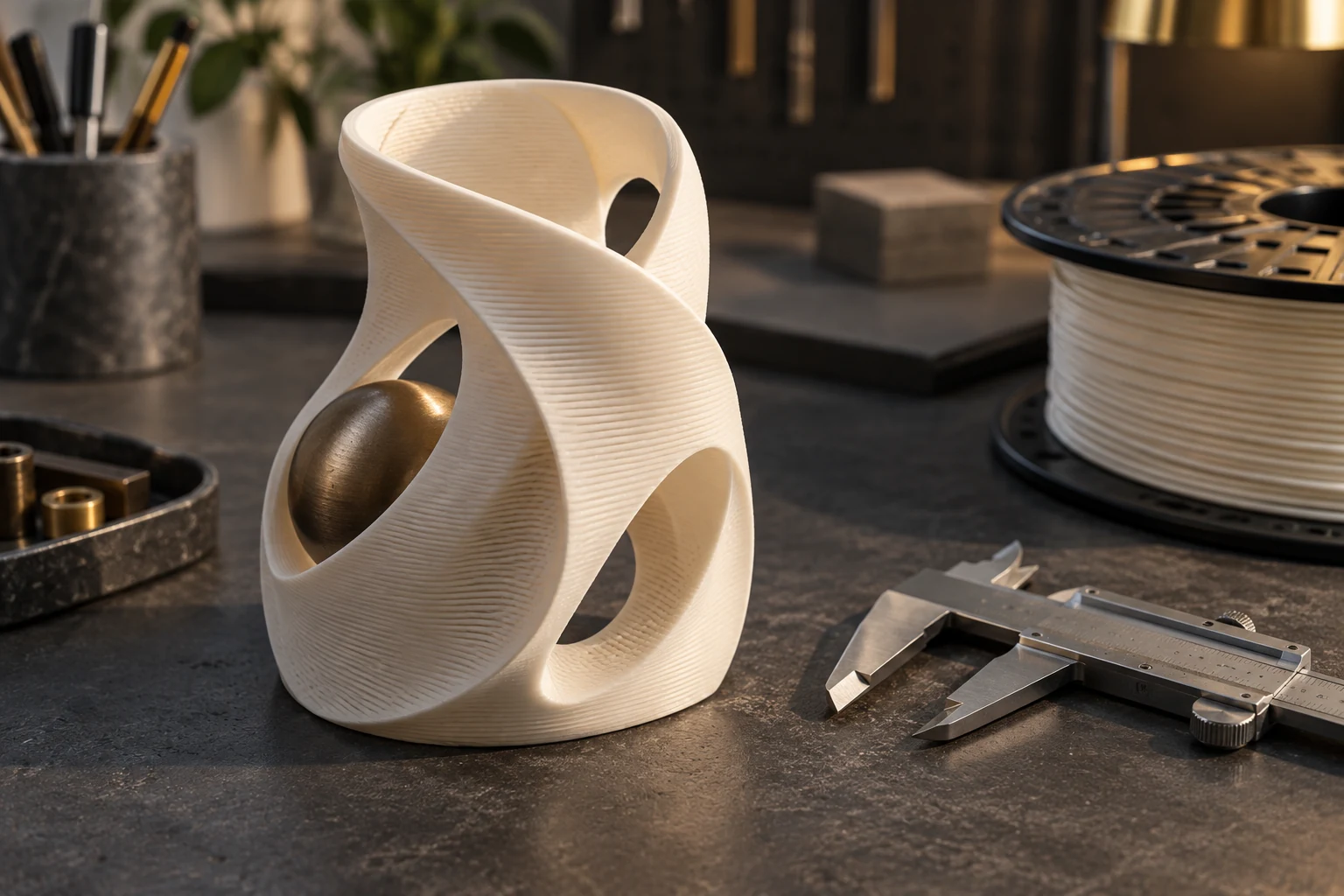
Turn a drawing or idea into a reviewable model before producing quantities. Dimensions, wall thickness and material are established, with a physical trial where fit needs verification.
Presentation images explore shape, material and lighting. Camera angles, backgrounds and usage are agreed; a rendering communicates a design direction rather than proving a manufactured product exists.
Prepare elements and drawings with attention to material, tooling and mounting. Machine specifications, thickness and tolerances must be approved with the workshop before production.
Design forms for commercial presentation or a specific use, considering logo space, stability and assembly. NFC holders can be discussed, with electronics, programming and testing specified separately.
Is the deliverable a presentation image, decorative object, prototype or functional part? We establish dimensions, units and interfaces with other components. A visual reference alone cannot establish the fit of a mechanical part.
The review covers shape, detail, wall thickness and clearances appropriate to the use. For printing, we examine mesh closure, intersecting surfaces and orientation. Material and production method influence the model and should be discussed before approval.
Materials, light and camera placement create a presentation image but do not prove manufacturability. STL or 3MF may suit a printing workflow; other processes need different files. Export choices follow the producer’s software and requirements.
Accurate fit may require a physical trial and revision after measurement. Material, supports, finishing and shipping are separate costs unless included. Decorative models are not validated for medical, structural or food-contact use without appropriate specialist assessment.
Reference drawings or photographs, dimensions and units, intended function, material or process if known, and quantities. Identify contact surfaces, movement, heat and loads before quoting.